Ginger: From Kitchen Spice to Research Subject
Exploring how a common culinary ingredient has become a focus of extensive scientific investigation.
Introduction to Ginger
Ginger, the rhizome of Zingiber officinale, has been a staple of both culinary and medicinal traditions across Asia, India, and the Middle East for over 5,000 years. The warming, pungent flavor that characterizes ginger comes from its complex array of bioactive compounds.
What makes ginger particularly interesting from a scientific perspective is that it's simultaneously a common food ingredient and a subject of rigorous scientific investigation. This combination has provided unique opportunities for researchers to study its properties in various contexts.
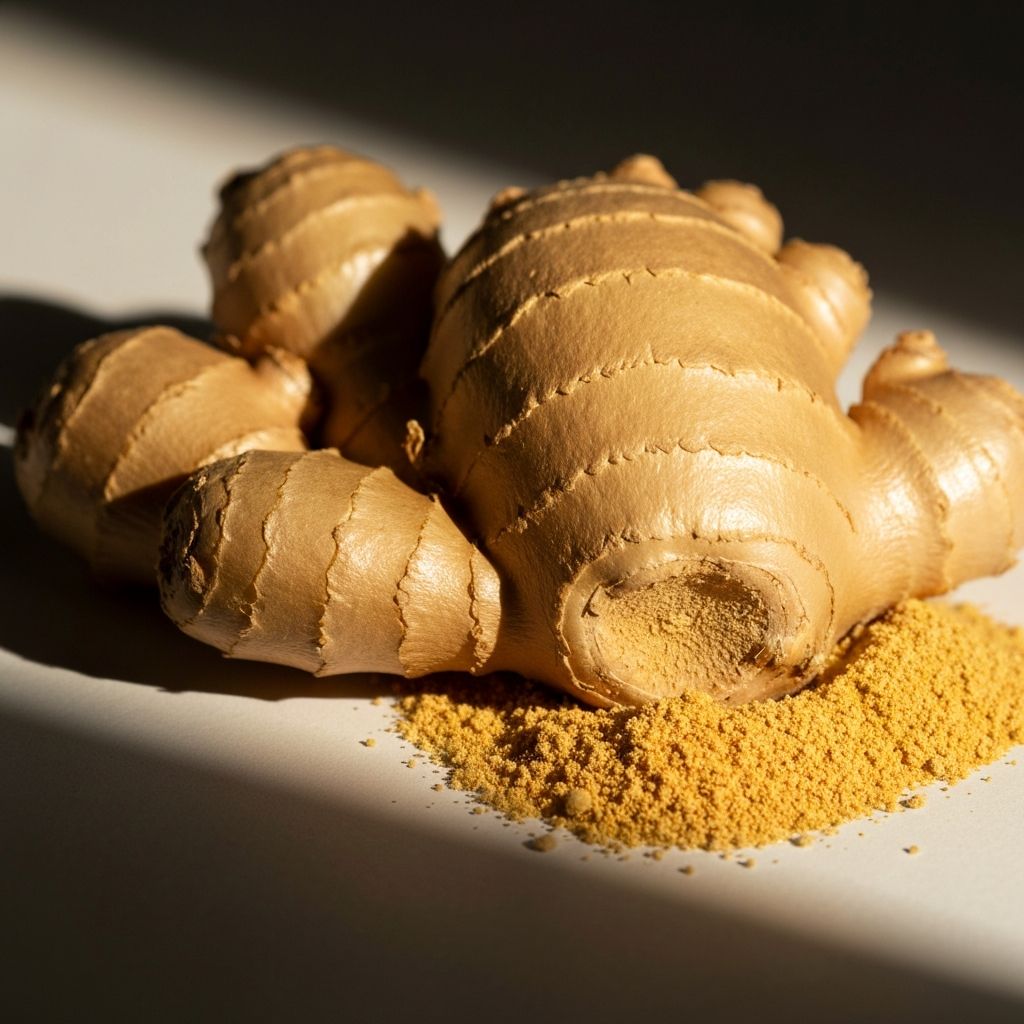
The ginger rhizome contains numerous bioactive compounds.
Bioactive Compounds in Ginger
Fresh ginger contains over 100 different compounds, many of which demonstrate biological activity in laboratory studies. The primary bioactive compounds include:
Gingerols
The primary pungent compounds in fresh ginger, particularly 6-gingerol. These compounds are responsible for much of ginger's biological activity and pungent flavor.
Shogaols
Formed when fresh ginger is heated or dried, shogaols are actually more abundant in dried ginger preparations and possess distinct biological properties.
Paradols and Zingerone
Additional pungent compounds present in ginger that contribute to its biological profile and flavor characteristics.
Essential Oils
Volatile compounds that provide ginger's characteristic aroma and may contribute to its biological activities.
Polyphenols
Antioxidant compounds present in ginger that may support cellular health and protection.
Sesquiterpenes
Complex hydrocarbons that may contribute to ginger's biological effects and anti-inflammatory properties.
Traditional Uses and Wellness Applications
Ayurvedic Tradition
In Ayurvedic medicine, ginger is considered "universal medicine" (vishwabhesaj). It's recommended for:
- Supporting digestive function
- Promoting circulation
- Supporting joint health and flexibility
- General wellness and vitality
Fresh ginger is preferred in Ayurveda for certain applications, while dried ginger is used for different purposes, reflecting understanding of how preparation methods alter properties.
Chinese Traditional Medicine
In Traditional Chinese Medicine, ginger (fresh as "sheng jiang," dried as "gan jiang") has different applications:
- Supporting digestion and preventing nausea
- Promoting circulation and warming the body
- Supporting joint comfort
- Immune system support
TCM practitioners often combine ginger with other herbs in carefully balanced formulations.
Scientific Research on Ginger
Laboratory Studies
Cell-level research has identified numerous mechanisms through which ginger compounds interact with cellular processes:
- Effects on specific cellular signaling pathways
- Interaction with enzyme systems relevant to wellness
- Antioxidant activities in laboratory settings
- Modulation of cellular responses
Human Clinical Research
Numerous clinical trials have examined ginger's effects in humans. Research has focused on:
- Supporting digestive comfort
- Promoting general wellness
- Supporting joint comfort and flexibility
- General health during various life stages
Bioavailability and Absorption
Unlike some other botanical compounds, ginger's bioavailability is relatively favorable, particularly when ginger is consumed as food or when fresh ginger preparations are used. Key considerations include:
Fresh vs. Dried Ginger
The compound composition differs between fresh and dried ginger, with shogaols being more prominent in dried preparations. This difference affects both bioavailability and the specific biological effects observed. Many researchers find fresh ginger offers superior absorption of gingerols.
Food Context
When ginger is consumed as part of food, absorption characteristics differ from isolated supplements. The culinary context—whether prepared with fats, heated, or combined with other foods—influences how compounds are processed and utilized.
Practical Applications and Forms
Fresh Ginger
Raw ginger in cooking and beverages remains the most accessible form with good bioavailability and the full spectrum of fresh gingerols.
Dried Ginger
Dried ginger powder contains higher concentrations of shogaols and offers different flavor and biological profiles compared to fresh ginger.
Ginger Supplements
Various supplement forms including extracts, standardized powders, and capsules offer concentrated doses for research and clinical applications.
Ginger Tea
Steeping fresh or dried ginger provides a traditional preparation method combining bioavailability with the benefits of heat and water extraction.
Ginger Oil
Essential oils and lipid extracts concentrate ginger's aromatic and potentially bioactive compounds for various applications.
Combination Formulas
Ginger is frequently combined with other botanicals in traditional formulations, potentially creating synergistic effects.
Research Gaps and Future Directions
While ginger has been extensively researched, several areas merit continued investigation:
- Optimal forms and dosages for specific applications
- Long-term effects and safety profiles
- Individual variations in response and why some people experience robust effects while others see minimal response
- Interaction between fresh and dried ginger forms and other compounds in combination formulas
- Mechanisms specific to joint health and flexibility support
The transition of ginger from traditional wisdom to modern research subject demonstrates how culinary plants continue to reveal their complexity and potential value in supporting human wellness.
Disclaimer: This article is educational. Consult with a healthcare professional before using ginger supplements, particularly if you take medications or have existing health conditions.